Large Bronze Figure Sculptures

With my large figurative bronze sculptures, my style varies depending on the time, material, and occasion for which I sculpted the work:

Abstract, with emphasis on holes (“Walking Forwards,” “Standing Together,” and “Family Group”). This newer style, originating from 2017, was developed in response to a brief for a public commission for organ donation, displayed in front of Northampton Hospital. The public viewing of the sculpture necessitated avoiding provocative or inappropriate nudity that appears too realistic; the topic of “organ donation” led me to incorporate holes to express the missing (or shared) organ between two people. The holes also refer back to famous sculptors Moore and Hepworth, who introduced holes to public sculptures between 1930 and 1960. All three figures contrast solid, strong volumes with empty, half-circular spaces that penetrate the whole width of the sculpture.

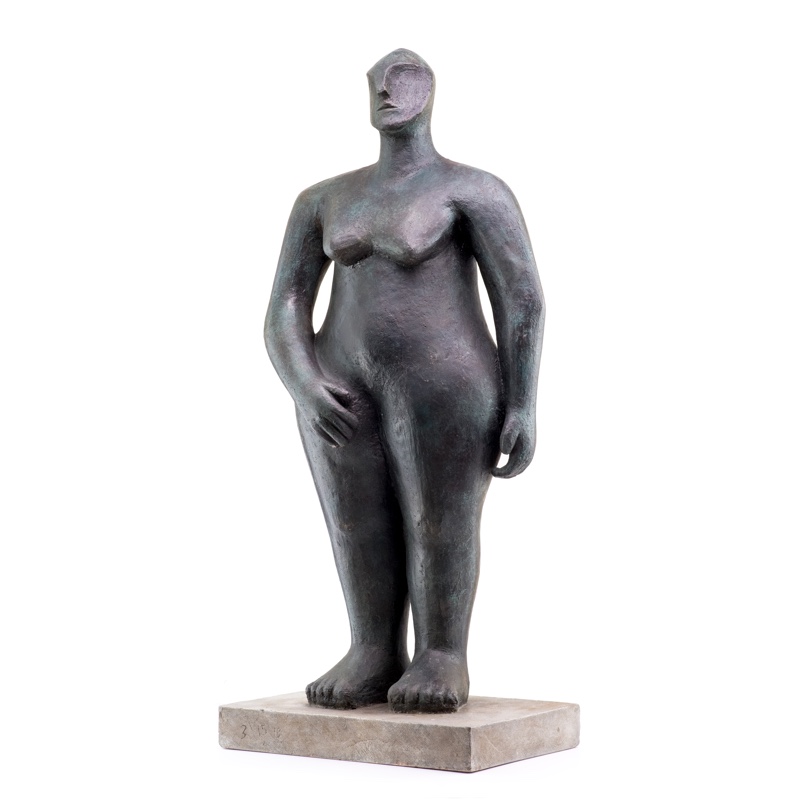
Linear style with strong contrasts of flat versus round, angular versus flowing lines, and large versus small volume (“First Woman,” “Little Venus,” “Trumpet Woman”).

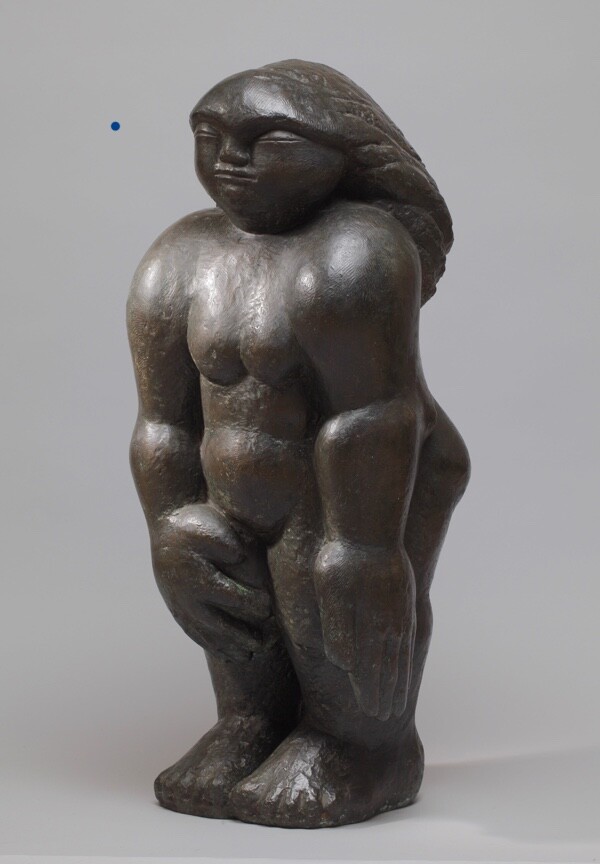
Compact style due to stone carving (“Primitive Woman”).

With the exception of “Woman Hands on Hips” and “Primitive Woman,” I don’t show facial features; “Family Group” has only small nose stubs; “First Woman” faintly shows jaws to indicate the upward movement of the head; or the head is reduced to the shape of a doorknob (“Ready”). Keeping the face “invisible” helps redirect the viewer’s attention towards the body and concentrates on a universal message rather than describing an individual woman.

With “Abstract Torso,” I took the “headlessness” to new heights, comparing a pregnant woman’s body to a flower with voluminous petals.

With most of my bronze sculptures of women, I emphasize strength and steadfastness—holding your ground, standing firm; though “Little Venus” is a bit shame-faced about it.
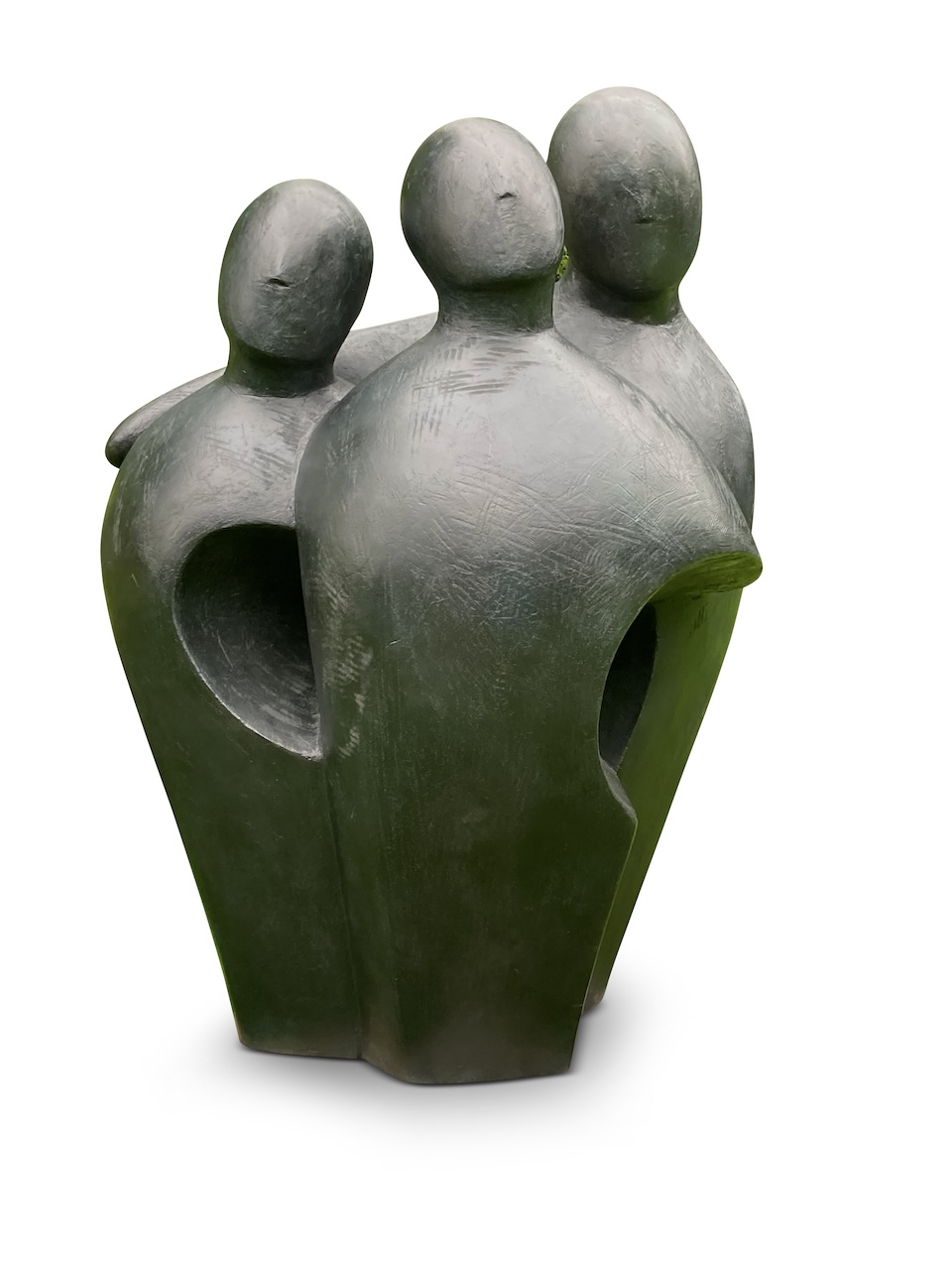
Family Group

2026-09-28T18:34:29+00:00

Based on ancient sculptures of European Mother Goddesses, this figure is so abstracted as to become a symbol - of strength, pro-creation, and the nurturing body from which incessant forms of life emerge. Parts of the body inessential for procreation have been made smaller, of even left away altogether: the head, the feet, the arms and hands.Yet the middle area of the body - the womb, the hips, the stomach are increased in size and importance. The theme is fecundity both literally and as a symbol of other forms of creativity. Sculpturally, I was most interested in two contrasting formal elements: of small and large size (head and hips) and of volume and roundness versus flatness or pointedness

Family Group2026-09-28T18:34:29+00:00

Standing Together 2018

2026-09-28T18:34:31+00:00

Originally the figurative sculpture was created as a maquette (=clay sketch) for a hospital sculpture commission; however, it soon took on a life of its own. It depicts the closeness between two human beings - possibly a man and woman , but this is up to the beholder . By leaving away the lower body, the upper body gains in importance , with the two overlarge heads, and the suggestion of two arms. the gesture of the backward figures arm supportively resting on the frontal figure is . The sculpture is much indebted to henry Moore and Barbara Hepworth , with its emphasis on the shared hole , in luminescent turquoise ,between the two figures. It owes much to Plato’s myth ( Aristophanos, in the “Symposium”) of the ever yearning two human beings , both missing something they hope to acquire or find in some one else

Standing Together 20182026-09-28T18:34:31+00:00

First Woman

2026-09-28T18:34:34+00:00

Based on ancient sculptures of European Mother Goddesses, this figure is so abstracted as to become a symbol - of strength, pro-creation, and the nurturing body from which incessant forms of life emerge. Parts of the body inessential for procreation have been made smaller, of even left away altogether: the head, the feet, the arms and hands.Yet the middle area of the body - the womb, the hips, the stomach are increased in size and importance. The theme is fecundity both literally and as a symbol of other forms of creativity. Sculpturally, I was most interested in two contrasting formal elements: of small and large size (head and hips) and of volume and roundness versus flatness or pointedness

First Woman2026-09-28T18:34:34+00:00

Little Venus

2026-09-28T18:34:35+00:00

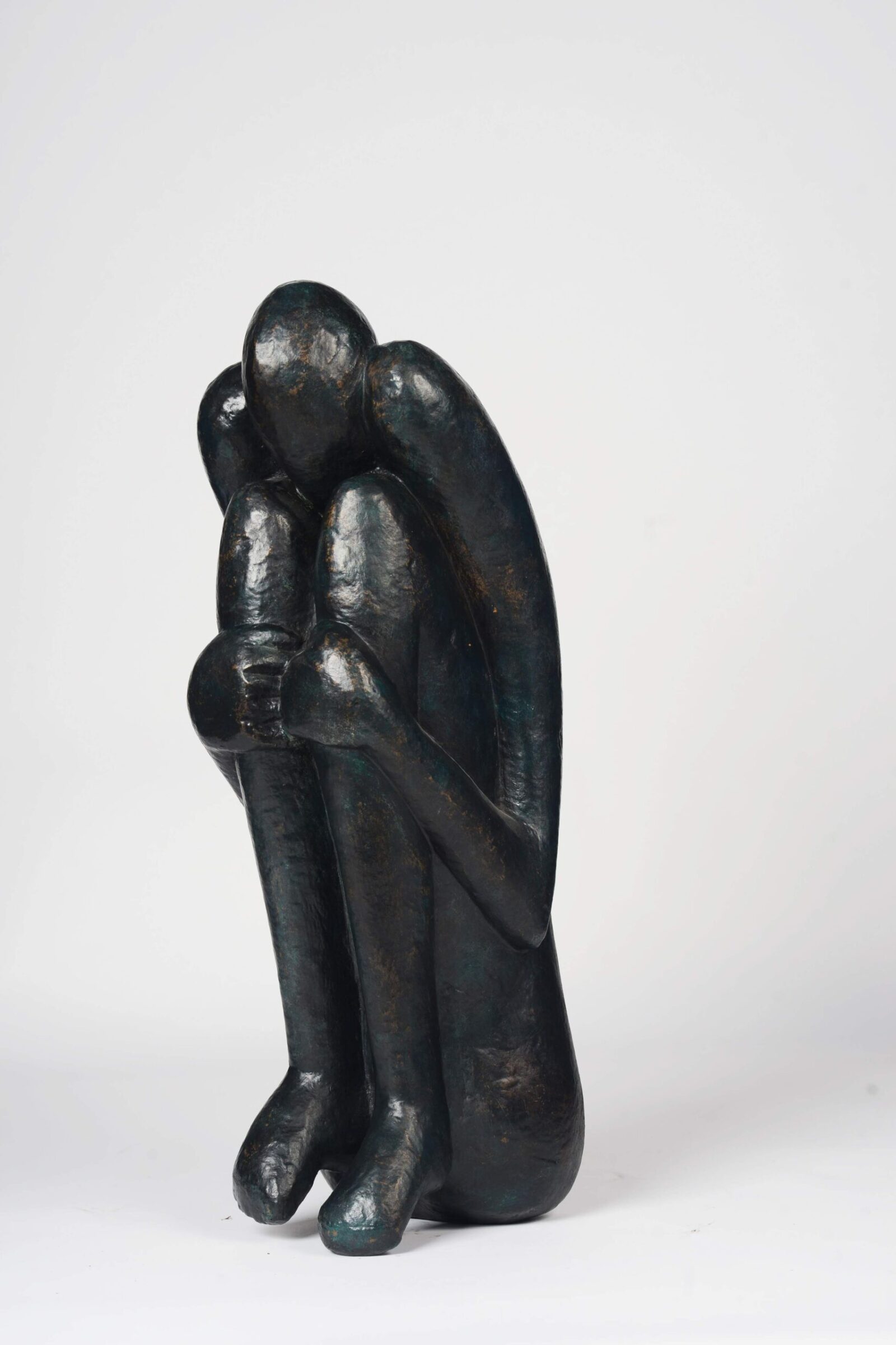
This Goddess feels a bit awkward about her considerable power, and tries to make herself smaller - even make herself vanish by treading on her own feet! This sculpture is a gentle joke about the low self-esteem many women indulge in are forced into this position of low self value by their society , upbringing or and environment.

Little Venus2026-09-28T18:34:35+00:00

Ready 2012

2026-09-28T18:34:37+00:00

Originally this figurative sculpture was created as a commission for a sports college in Northampton to celebrate the 2012 Olympic year.

Ready 20122026-09-28T18:34:37+00:00

Primitive Woman 1990

2026-09-28T18:34:40+00:00

Originally carved from Lincolnshire (Ancaster) stone , this figurative bronze sculpture embodies the dense, compressed attributes of that material: steadfastness and endurance. Her neck is squashed, with her head hardly rising above her body; her arms are so tightly held against her body, that they seem embedded. Her stance is ambivalent: from the profile view , she appears dynamic : her hair is pulling her backwards, simultaneously straining and bending forwards, as if struggling against the wind. From the front however, this sculpted stone woman seems immobile, rooted to the earth that she defends will all the massive volume of her compact body .

Primitive Woman 19902026-09-28T18:34:40+00:00

Abstract Torso

2026-09-28T18:34:41+00:00

Originally, this sculpture was created as  one of three”pregnancy pots”,  conceived as a vessel/container to symbolise the experience of  my first pregnancy.

Abstract Torso2026-09-28T18:34:41+00:00

Trumpet Woman 2011​

2026-09-28T18:34:43+00:00

This figural ceramic sculpture of a thin woman, her arm ending in two large trumpet-like shapes was inspired by Chinese ceramic glazed sculptures of ladies with very wide sleeves. The form was very close to full abstraction: when I took the head off the sculpture, no figure could be recognised.

Trumpet Woman 2011​2026-09-28T18:34:43+00:00
Go to Top